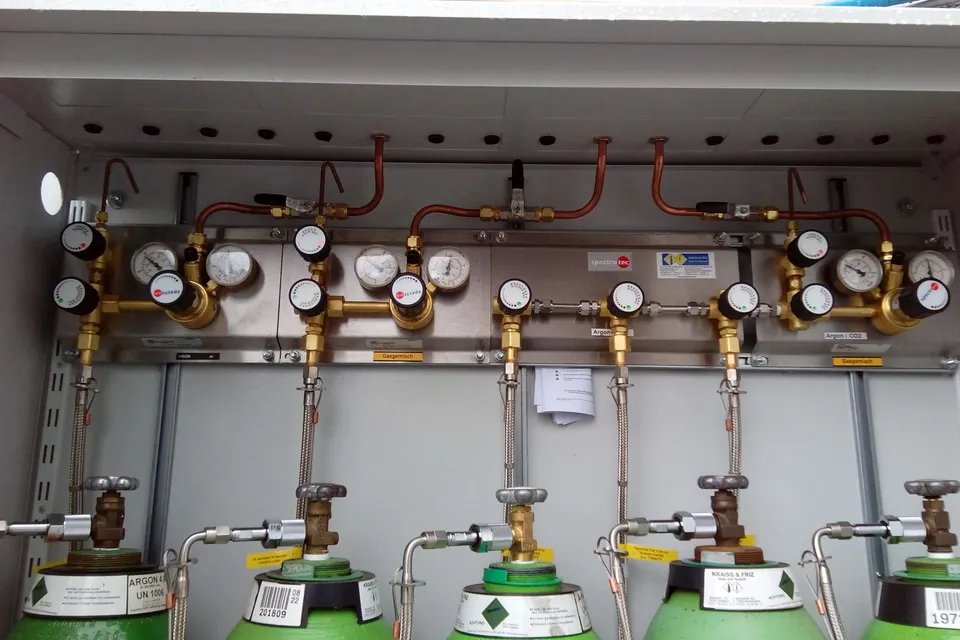
Stationary pressure tanks
For applications with a constant demand for gas under pressure. Stationary installation with vaporiser and pressure control line.
Diese Seite gibt es auch auf Deutsch. Zur deutschen Fassung


Planning · Installation · Maintenance
From a single cylinder change to the complete gas supply of your plant — from one source.
Our application engineers develop the right supply model with you — including tank installations, pipework systems, pressure reduction stations, tapping points and pressure regulators. Installation, commissioning, inspection and maintenance are carried out by our own qualified staff.
Advice, planning, delivery
As gas consumption grows, moving from cylinder supply to a central solution begins to pay off. We analyse your demand, design the matching concept and implement it through to commissioning, including all safety inspections.
For larger volumes we store cryogenic liquefied gases in vacuum-insulated tanks, stationary or mobile. On request we install remote monitoring with automatic replenishment.
Available from stock
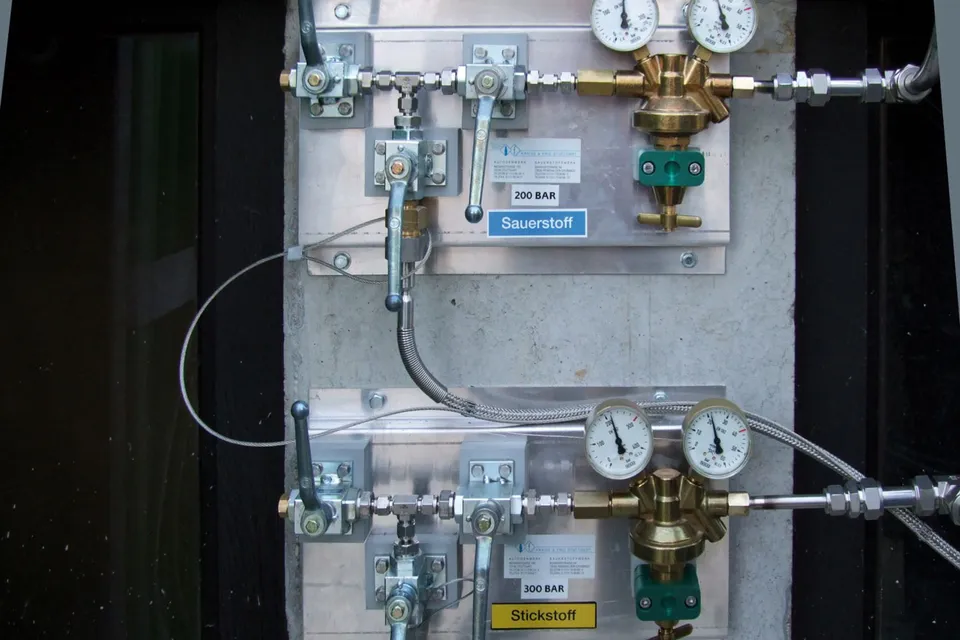
When consumption grows, a tank starts to pay for itself. We keep large tanks from 2,000 to 50,000 litres in stock or available at short notice, and agree the size that suits you individually.
We plan, build and operate tank installations for cryogenic liquefied gases such as oxygen, nitrogen, argon and carbon dioxide, as well as for LPG (propane). Filling is done by our own fleet — not by a subcontractor.
For applications with a constant demand for gas under pressure. Stationary installation with vaporiser and pressure control line.
For cryogenic liquefied gases such as oxygen, nitrogen, argon and CO₂, filled by our own road tankers, with remote monitoring on request.
Exchange and transport vessels for temporary demand or special projects — on request.
Supply at the workplace
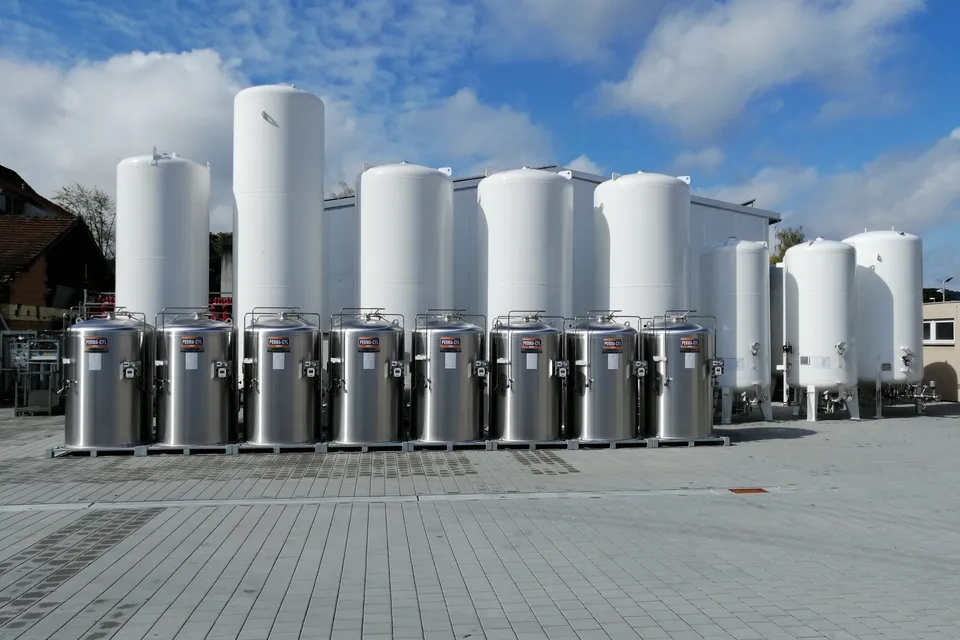
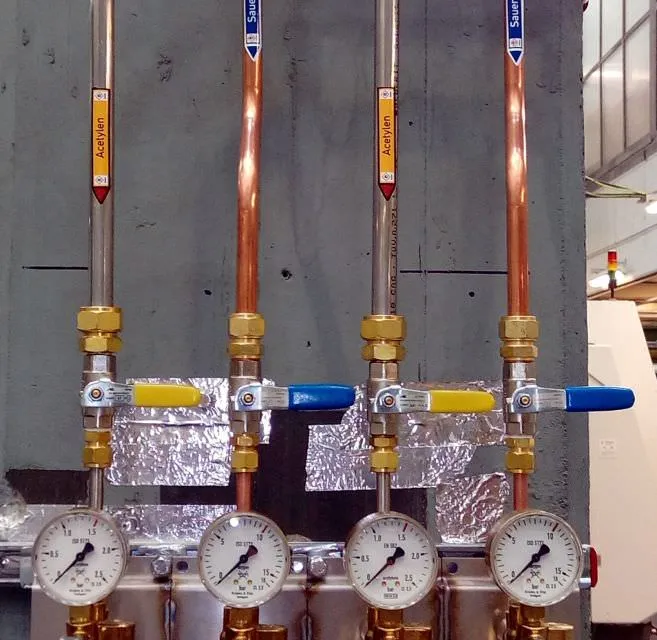
Instead of a separate cylinder at every workstation, a central installation supplies your workplaces through pipework — with clear advantages for safety, maintenance and daily operation.
Keeping it running
So that your gas installation runs reliably: inspections, repairs and safety checks carried out by our own specialists.
Regular maintenance is carried out at fixed intervals. A due service can often be combined with an upgrade, for example to bring parts of the installation up to the current safety standard or to avoid downtime.
Arrange a service date